
If you arrived from a former china.iicexpo.com address, you are on the restored historical destination for that host. This website preserves archival and industry context; it is not an official live-event organizer site.
The Rise of Domestic Tech Hubs
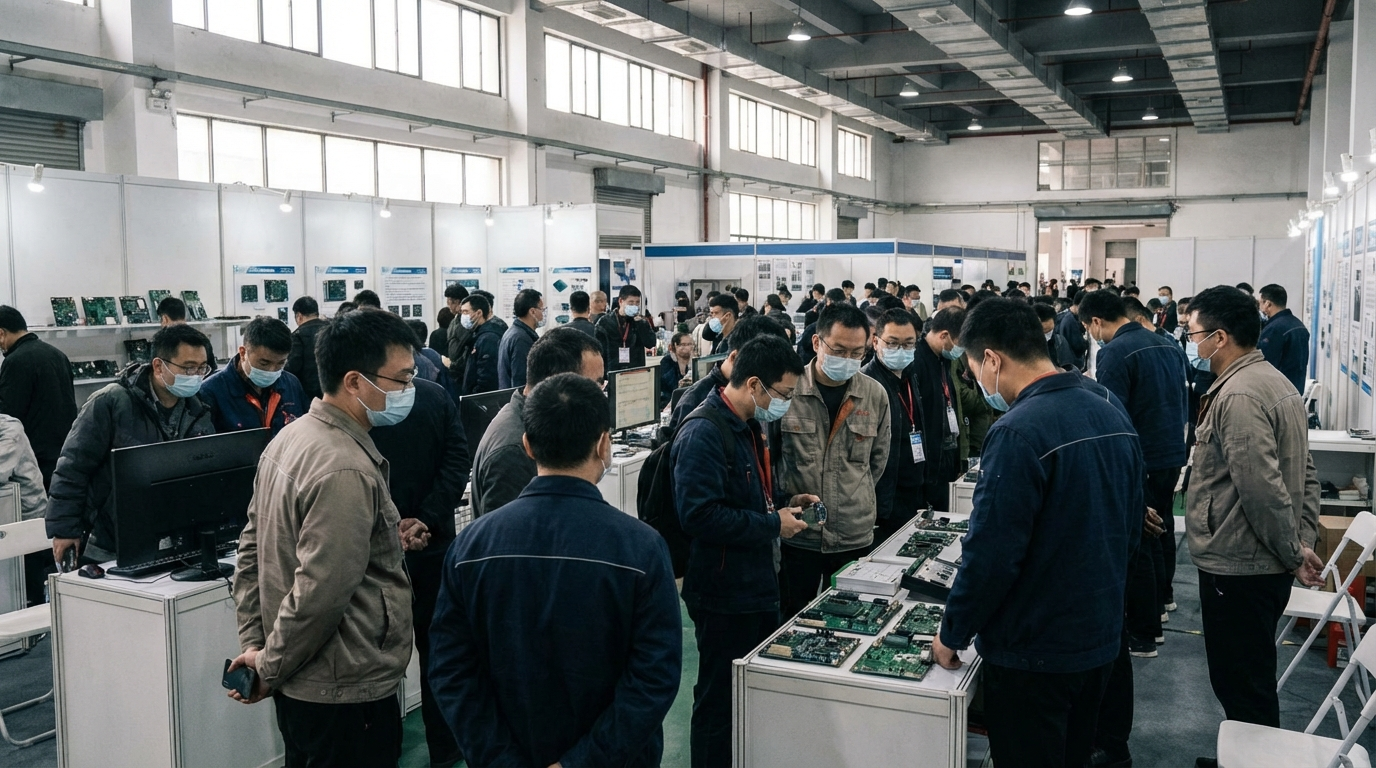
The growth of the International IC-China Conference & Exhibition (IIC-China) mirrored the regional specialization of China's technology sector. The exhibition footprint followed industrial geography — each city event served a distinct professional community, addressed different commercial priorities, and reflected the industries concentrated in that region.
Exhibitions in this context were not merely commercial gathering points. They functioned as instruments of industrial policy alignment, talent development, and supply chain integration. Government industrial parks, local technology associations, and regional universities all participated in the exhibition ecosystem — contributing an institutional dimension that distinguished Chinese trade shows from their Western counterparts.
Shenzhen: The Manufacturing Core
The undisputed center for hardware production, EMS, and PCB assembly. Shenzhen exhibitions focused relentlessly on rapid prototyping, BOM cost optimization, high-volume component sourcing, and connecting global chip vendors directly with the factory operations that would install their silicon into hundreds of millions of consumer devices.
The Huaqiangbei electronics market district created a unique surrounding ecosystem that amplified the commercial density of Shenzhen-based exhibitions — buyers could evaluate suppliers at the show and immediately test component availability at adjacent retail markets.
Shanghai: IC Design & Fabless
Shanghai and the Yangtze River Delta emerged as the center for advanced semiconductor design, foundry engagement, automotive electronics, and EDA software deployment. Shanghai events attracted China's most internationally connected engineering teams — those engaged in original chip design, working directly with foundry process nodes, and developing the IP that would eventually challenge international vendors across multiple product categories.
Beijing: Research & Telecom
Exhibitions in the capital traditionally leaned toward telecommunications infrastructure, government research programs, aerospace electronics, and core research institute engagement. The Beijing exhibition audience was less dominated by commercial manufacturing buyers and more by engineers from state-affiliated institutions — a profile that reflected the capital's role as a policy and research center rather than a production hub.
Chengdu: The Embedded West
As the "Go West" economic strategy expanded investment into Western China, Chengdu became a critical focal point for embedded systems, industrial automation, and defense electronics. Chengdu exhibitions served engineering communities at a significant geographic distance from coastal manufacturing centers — making the exhibition the primary practical mechanism for accessing supplier relationships and technical knowledge otherwise concentrated in Shenzhen and Shanghai.
Connecting the Local Supply Chain
Local exhibitions allowed domestic component distributors to act as the vital commercial intermediaries between global chipmakers and the millions of small-to-medium manufacturers operating in Southern China. These distributors — more accessible, more linguistically capable, and more operationally aligned with Chinese manufacturing practices than direct vendor sales operations — used the exhibition floor to expand their customer networks, introduce new vendor lines, and manage the practical challenges of Chinese-language technical support.
The localized events featured Mandarin-language technical training, localized datasheets, direct integration support in Chinese-language formats, and pricing structures adapted to the volume dynamics and payment practices of the domestic manufacturing industry. This was the practical infrastructure of supply chain integration.
Industry Association Participation
Chinese industry associations — including electronics industry bodies, semiconductor alliance organizations, and regional technology chambers — participated consistently in the exhibition structure. Their involvement served both to legitimize the exhibition as an institutional event and to connect it with the broader framework of industrial policy, standards development, and talent cultivation that characterized China's deliberate approach to technology sector development.
This institutional dimension is an important part of the archive record. Chinese electronics exhibitions were not purely commercial events — they were embedded in a broader ecosystem of industry governance, policy signaling, and national technology strategy that distinguished them from equivalent events in market-only economies.